Wednesday, February 8, 2012

Goodbye Megatop


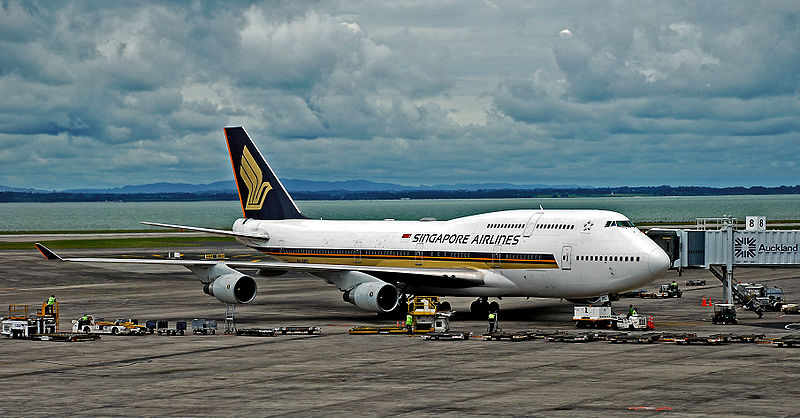
I have first seen an image of Boeing 747 in a cartoon in early 80s in when I was in pre-school ages. Since I also knew a circus elephant named jumbo from another cartoon, it was strange for me to see a plane named jumbo. I have dreamed about taking one as a passenger since than but those were the times the plane tickets were not within reach of middle class. It took some 20+ years I had a chance to fly with one. That was my only time and that was thanks to Singapore Airlines. SIA normally flew Boeing 777 on the Istanbul - Dubai - Singapore route but that day for my luck, they have put a jumbo jet, Boeing 747 to serve this route.

Boeing 747-400 series airliners were introduced to SIA fleet in 1983 and named named Megatops.  They have been flagships of the airline from 1989 until the introduction of the Airbus A380 in October 2007. In 2003 SIA had 39 of them. Today it has only three. Unfortunately Singapore Airlines is saying goodbye to these beautiful planes soon with the last B-747 commercial flight from Singapore to Melbourne and back on March 24th 2012. The airliner was using the plane since 1973:
"SIA's big-aircraft needs are now mainly served by the Airbus 380 superjumbo, which is a more cost-effective and fuel-efficient plane to fly. 
The airline now has 15 A-380s with four more to be delivered in the next few months. The SIA spokesman said the local carrier has no immediate plans to order more A-380s or Boeing's new 747-8, an aircraft which will be launched into commercial service some time this year.  
The phasing out of the B-747 aircraft has also made it difficult for frequent fliers on the SIA Saver Scheme to redeem miles because the older aircraft services only limited flights. But from March 8, SIA will allow frequent fliers on the Saver programme to book business and first-class flights on the A-380 and other new aircraft."
Source : SIA says goodbye to Boeing 747 jumbo
Singapore Airlines Megatop
Boeing 747 -400 series airliners were introduced to SIA fleet in 1983 and were called Megatops. 
The real reason to phase out Boeing 747 can be the fact that the airliner, which faces increased competition as well as potential disastrous results of a possible European debt crisis, is not willing to buy more jumbos whether they are Airbus A-380 or Boeing 747. 

Tuesday, February 7, 2012

Queensland's tourism capital, the Gold Coast is Scoot's second Australian destination


Scoot, the medium and long haul no-frills arm of Singapore Airlines has just announced that Queensland's tourism capital, the Gold Coast, will be its second Australian destination after Sydney. Scoot will fly from Singapore to Sydney and The Gold Coast by mid 2012 and as a budget carrier it will charge 40 percent less ticket price than regular carriers. Tickets for Scoot's flights will go on sales in the first quarter of 2012, and it seems like their next long haul target country will be China. .

"Queensland's tourism capital, the Gold Coast, and its iconic beaches provided the backdrop for Scoot's announcement of its second Australian destination. Tourism Queensland, Gold Coast Tourism, Gold Coast Airport and Scoot today jointly announced a partnership agreement that will see Scoot as the first airline to fly direct between Singapore and the Gold Coast, and back of course.From mid-2012, Scoot will operate five non-stop flights a week, making the "famous for fun" Gold Coast experience literally a "scoot" away!"
Source : Ooo…Scoot to OOL- Non-stop!

Currently, the airline is also running a refer a friend campaign where you can win a pair of air tickets. 

Sunday, February 5, 2012

An unconventional way to find cheap flats in Singapore and Hong Kong for investment


If you want to buy a cheap flat in Singapore and Hong Kong for investment reasons, there is a very unconventional way to find one: checking on the haunted houses. Although these two cities are modern marvels, the thousands of years old superstitions still rule. For example, it is believed that the hungry ghost of a person who dies in unnatural circumstances – a suicide, murder or bad accident – inhabits his/her home (remember the countless Japanese movies on Onryo like Ringu) passing misfortune onto the new occupant. These houses will deter ethnically Chinese buyers, who compose the majority of the property buying demand in Singapore and Hong Kong. But these ghost stories will fail to have any impact on expatries who compose the majority of the property rental demand in Singapore and Hong Kong:

“But not everyone is afraid of ghosts, and in the cut and thrust of the Hong Kong’s runaway property market, some investors are actively following the tragedies, aware that dark incidents push the price down. Discounts of between 20 per cent to 40 per cent are the standard for the haunted houses, with a knock-on for the rental yield, said Mr. Eric Wong of the squarefoot.com.hk  property web site, which has a channel dedicated to the phenomenon. “[1]

squarefoot.com.hk Haunted Houses page
The web site’s web page for haunted houses in Hong Kong lists a list of Hong Kong properties with what happened and when it happened. Some investors specifically looks for these houses to buy and then they rent them to expatriates who do not have the same beliefs as Hong Kong people so they do not care about the history of the house. Haunted houses can be sold with 40% depending on what happened and how recently it has happened.

I have seen several lists circulated in internet about haunted properties in Singapore to warn buyers about their history. And there are several ghost stories in this small island for example the pontianak (a vampiric ghost in Malay and Indonesian mythology) around the house and the nearby Bukit Brown and Mount Pleasant cemeteries. Recently residents of two Woodlands HDB blocks petitioned against building an elder-care centre at their void decks with worries of more deaths in the area and thus reduced property prices.

These things really matter here. A few years ago a friend of mine rented a unit a little cheaper than the units around. The unit number was 413. 4 is considered an unlucky number in Chinese because it is nearly homophonous to the word "death" and 13 is the unlucky number for western cultures! On the opposite side, you will see that units on the 8th floor or with a lot of 8ths in its unit number tend to be more expensive (sounds similar to the word which means "prosper" or "wealth").

[1] - Haunted House Discounts in Hong Kong, The Straits Times

Thursday, February 2, 2012

More HDB flats for rent in Singapore


If you are looking for a place to rent in Singapore, public housing flats called HDB, are the most cost effective and the best value-to-price alternatives compared to over-expensive private housing units. Luckily, the supply of these units has more than tripled in the past five years – from 12,500 in 2006 to 40,026 units:

“The number of Housing & Development Board (HDB) flats being sublet(*) has more than tripled in the past five years. The reasons include the relaxation of subletting rules, and an increase in foreigners. With more HDB home-owners using their flats to earn rental income, some analysts are concerned this will lead to a shortage of supply in the resale market. The number of HDB flats on the rental market has shot up from about 12,500 in 2006 to 40,026 in 2011.

Previously, flat owners could only lease out their flats if they could show proof they had been living overseas for a certain period of time.  Since 2003, the HDB has gradually brought down the minimum occupation period (MOP) after which owners can sublet their flats. Currently, the MOP is five years for both new and resale flats, regardless of whether they are bought with a government grant.”

The actual number of HDB flats in the market is probably higher than these figures because there is also an under-the-radar subletting practice called “one room locked”.  HDB owners who do not have approval from HDB to rent the whole unit may rent the unit anyway by locking a room with his belongings. In this case when asked, he/she can say that he did not rent the unit and he still stays in the unit and he has just rented out several rooms. (For this reason you should always request for the approval letter for the unit from HDB owner before leasing it. If you are caught staying in a unit like this, you will be given a very short notice to leave!)

But the demand is increasing as well with increasing condominium rental prices, increase number of foreign workers and shrinking expatriate housing allowances:

“One relocation company, Orientations, said the number of expatriates opting to rent an HDB flat has gone up by 30 per cent, between 2010 and 2011. Many of them are mid-level professionals from Asia who are receiving smaller housing allowances compared to previous years. (**)  Orientations chairman Beverly Mayhew noted that the amenities in some public housing estates - such as swimming pools, transport hubs and recreational centres - make them very appealing to foreigners.”

Renting an HDB has many advantages over condominiums.  A large 3+1 (or 4 rooms flat) within 100 meters of a major MRT station can be rented for 2300 – 2400 SGD per month. Although this is expensive, it is much cheaper than 4,000++ SGD per month you would pay to a condominium which has the same location advantage. As many foreigners with valid working visas can rent an HDB flat, it is natural that the number of expatriates renting HDB increases (See also It makes more sense to rent HDB instead of Condominium).

One of the reasons that make newcomers shy of renting an HDB is privacy. Pre-BTO flats tend to have their common corridors on the outer side of the building and the living room and several rooms look to these common corridor. So anyone passing through corridor can see inside these rooms if curtains are not down. But this is not the case with new generation BTOs built in the last decade. These new flats have their common corridors inside the building and all their rooms looking outside the building.

Artist's impression of one of the new projects, Anchorvale Harvest. After this BTO flat is completed, it will require 5 years of MOP (Minimum Occupation Period) before its flats enter HDB rental market except the units approved as special cases - Source : Anchorvale Harvest Facebook Page
Some property experts believe that the high rental yields have made owners to rent instead of sell which adds to the severe supply shortage of HDB flats. And they suggest some intervention. I do not agree with them. If everything is legal, it makes perfectly sense to let owners to draw maximum return from their property as they wish, either by renting it out or sell it.  PropNex CEO Mohd Ismail says:

"I think we should not interfere and tweak with the rental amount, and I think it's perfectly all right if the market is prepared to pay such an amount, and people who have owned such properties and have legally occupied them, that's a form of return on their investments."

[1] - More subletting HDB flats


(*) – You may wonder why renting out an HDB is referred as sublet/sublease rather than leasing. This is because all HDB flats are 99 years leasehold properties ultimately owned by Housing Development Board.

(**) - As far as I know many of the mid-level professionals from Asia do not receive housing allowances at all.

Tuesday, January 24, 2012

Ridiculous European Debt Crisis Solution Cycle


David Einhorn is one of the most successful long/short equity hedge fund managers of the past decade. He is the manager of  4,6 Billion USD Greenlight Capital which has "returned 9.7% during the last quarter of 2011 with  net returns for 2011 is 2.9%. This is the 13th consecutive year Greenlight Capital managed to outperform the S&P 500 index.[1]

In the Greenlight Capital’s Q4 2011 investor letter, the comedy of European Debt Crisis repeated again and again in the last 1.5 years with the exact manner is depicted very good:

"The cycle looks like this: The time passes and the crisis deepens. Markets, eternal creatures of habit, begin to reflect the ensuing fear. Then, just as things appear to unravel, there is a reprieve, as red headlines race across the screen: "Sarkozy and Merkel to Meet at Deauville", "Obama Phones Cameron", or "Christine Lagarde Waves From Bus". The market jumps. You'd think the media would quit falling to this charade, but having run out of clever headlines to describe the impending doom - 'Eurogeddon' Really? - they herald every briefing, meeting, assembly, and conference.

The market embraces these announcements as eagerly as the media, behaving as if any and all communication is equally constructive, and likely to yield any solution. The market continues to rise until the day of that summit, as all ears await a Grand Communique. Within minutes of any proclamation, the market may cheer with a final, celebratory spike. Upon evaluation of the actual statement, it becomes clear that either nothing has truly been agreed upon, or that the plan is insufficient, impractical, or just won't work. The market sells off and the crisis deepens some more. Lather. Rinse. Repeat.

Source : Greenlight Capital Q4 2011 Investor Letter

Doing whatever it takes(!) and solving nothing - European Debt Crisis Cycle of 2010 - 2012

And again and again everyone is looking at these leaders for the solution, the guys who ridiculously repeat the same useless words, "do whatever it takes". This whatever it takes "seems to include everything except making necessary sacrifices that might actually solve the crisis".

The letter says that "2012 may be the year in which currency crisis will no longer be kept at bay by politicians buying time with empty promises" and "maybe the fall of Euro will be the 2012 catastrophe that Mayans predicted".

Some must reads to understand the dynamics of current and upcoming financial crisis:
This Time Is Different:
Eight Centuries of
Financial Folly
Endgame: The End of
the Debt Supercycle and
How It Changes Everything
The Theory of Money and Credit

[1] - Greenlight Capital Q4 2011 Investor Letter

Monday, January 16, 2012

Do not overlook LinkedIn when looking for a job in Singapore


A colleague in my company has recently secured a job from LinkedIn which reminded me the increasing importance of using LinkedIn to find a job in Singapore. Here, although traditional sources of looking for jobs are still very strong, I observe that people are increasingly using LinkedIn to connect more people and based on the views to my profile, recruiters are also increasingly using LinkedIn to find right candidates.

LinkedIn, if you have somehow not heard about it, is a business-related social networking site. A well prepared and well-connected LinkedIn profile may bring incredible job opportunities to you, most of the time with little afford from your side.

LinkedIn has a beta application called “Jobs You May Be Interested In”. This small section on the left hand side is worth to check frequently if you are looking for a job since it compiles a list of jobs those match your profile in some way. To optimize your chances you should complete your profile with all the information necessary to make your profile 100% complete and use right keywords in your profile which would help the LinkedIn algorithms to locate a suitable job for you.

Many people I know are extremely shy to announce that they have just got out of their job until they find a new one. But announcing the loss of the job may not be that bad idea since it seems to me like when you are “free”, some recruiters are notified and they call you. This happened to me and several friends. When I have found my current company, I have “left” my previous company in LinkedIn and did not announce my new company for a while. During these times several recruiters called me.

Another way to come across more employment opportunities in LinkedIn is to extend your network so that you fall into the network of more recruiters and join your interest groups in LinkedIn and keep an eye on the job listings there.

Since the best time to look for a job in Singapore is approaching, you should create a LinkedIn account if you have not done yet and enrich it with content and connections to be ready for the hunting period. As we have written before the best time to find a job in Singapore is after Chinese New Year holiday during when people already collect their bonuses, have rest and jump to new jobs.

Sunday, January 15, 2012

Singapore private property sales fell sharply in December 2011


Singapore property developers could sell 632 new private homes in December 2011, significantly lower than the 1,702 units of November 2011. This is a 62 percent month-on-month fall and although some part of the fall can be attributed to the seasonal year-end slowdown, it looks like the last round of cooling measures in December 2011 took its toll on the private property sales.

In December 2011, Singapore government has announced the second round of property market cooling measures and introduced an Additional Buyer's Stamp Duty (ABSD) of 10% for foreigners buying private property in Singapore. Share of foreigners in Singapore private property was 20% as of Q3 2011 which climbed from 16.22% at the beginning of the year.

The numbers are still near record for all 2010 according to The Straits Times:

"This brings the year's total to 16,026 units - just 266 units shy of the record 16,292 units sold in 2010. 
Sales were powered mainly by UOL Group's Archipelago which sold 103 units at a median price of $1,118 per sq ft (psf) and The Nautical in Sembawang Road which sold 84 units at a median price of $882 psf." 
Source : Private home sales in December slump

Singapore New Private Property Sales 2011
The Straits Times also reports that the property cooling measures making home buyers cautious:

"It is the week before Chinese New Year and home buyers, while still turning up in healthy numbers at show-flats, prefer to remain cautious and keep their options open. 
A Straits Times check over the weekend unearthed a steady stream of visitors at show-flats but few buyers. Analysts said the possibility that home prices might fall following the latest round of cooling measures last month kept many potential buyers at bay."

The main worry is (or should be) the European debt crisis. As John Mauldin put it boldly in his last Weekly E-Letter "Europe has not yet really entered into recession, which is almost guaranteed this year". Their banks are "are massively insolvent, because they have 30 times their capital invested in the second problem, which is the sovereign debt of countries that are going to have trouble paying that debt". This does not only mean slow economic growth at best and recession at worst for Singapore, it also means that interest rates can go north if these banks start to pull back capital from Asia to home to improve their capital structure.

There are also some wind changes regarding the Singapore property in 2011 which effects the market. First, there is a large supply of private property coming to the market between 2012 and 2015. Second, slow or negative economic growth combined with stricter Singapore PR and Singapore Work Pass criteria means less tenant to attract for these large pool of new properties, a significant portion of them are bought by foreigners and locals for investment purposes. Third, demand is and will be taken away by a large number of Executive Condominiums, increased earning limits for public housing and large number of HDB units released in 2011 and 2012 (50,000 in total). These all may work against the only supporter of the private property prices : the positive monthly cash flow generated from such property in a ultra-low interest plus ultra-high rent environment. Many owners would simply hold on until this cash flow is positive but they, especially the ones with many mortgages, will have difficult time when this cashflow becomes negative.

In the light of these facts, many analyst predicts price falls some are as high as 30 percent in 2012. So it may well be wise to wait-and-see other than locking into a property just before it falls from its new peek.


Saturday, January 14, 2012

Singapore Property News - 2012 2nd Week


Oversupply of Luxury Property
Singapore is facing an oversupply of luxury homes in 2012 while their primary buyers, foreigners, are required to pay 10% Additional Buyer's Staamp Duty tax since December 2011.
According to property consultancy CBRE, there are at least 25 launch-ready projects in districts 9 through 11 in the market. These districts are prime areas for high-end homes. The projects—including Ardmore 3, Leedon Residence and TwentyOne Anguilla Park opposite Wheelock Place—are made up of more than 2,000 unsold units.
CBRE also revealed that at least 30 already-launched projects in these districts still had at least 2,846 homes (or 50% of their units) unsold as of the end of November last year. Majority of these unsold homes came from the D'Leedon (with 1,257 of 1,715 units unsold), the Twin Peaks (413 of 462 unsold), the Hilltops (208 of 241 unsold); and the The Scotts Tower (200 of 231 unsold).
Taken into account all the homes that were not even released for sale, the stock of high-end homes stands at 5,903. This number excludes the luxury units of Sentosa Cove, where sales have also slowed drastically. According to caveats lodged with the Urban Redevelopment Authority, there were only 12 new sales in Sentosa Cove for the whole of 2011. 
 Show flat buzz not translating to sales
European debt problems has started to bite in Singapore's growth, banking and financial industry players are laying off workers, an oversupply of flats are entering the market from 2012 and new measures effected 10% of all private property buyers (foreigners) in Singapore. So there is no rush to buy a property now, which can turn into a 30% loss in the next few years:


The Straits Times has reported that Qingjian Realty’s Riversound Residences in Sengkang East Avenue has attracted “hundreds of viewers”. In spite of the traffic, UBS Investment Research reported a “lukewarm take-up” of the project. Only 50 of the 250 units launched at the estate were sold, at an average price of $850 per sq ft (psf). For instance, one four-room flat spanning 1,259 sq ft sold for $1.13 million (or $896 psf) after discounts. The project comprises 590 apartments. 
Property agents told The Straits Times some 700 home seekers visited the showflat over two days, but the majority of them were only looking around, not planning to make a purchase.
Indeed, this trend seemed to carry across other launches. For one, the 577-unit Archipelago at Bedok Reservoir faced a similar sales slump. Its developer UOL Group declined to provide The Straits Times with numbers, but said, “We are pleased with the interest and level of visitors at our showflat over the last few days. 
“We had transactions done over the weekend. Buyers are taking more time to commit and we hope to see more sales going forward,” it added. Source : Show flat buzz not translating to sales

Rented a flat at last!


I have finally found an HDB flat for rent after looking for an HDB flat for months. Although the price was higher than I was planning to pay, at least the unit was deserving it. As I have written before, it was a very frustrating process at the beginning thanks to the new lows of Singapore property agents but luckily I have started very early to look for one and did not have to end up with an inferior but expensive unit. Big bonus was that at the end, I did not pay a penny to any property agent.

Do not get me wrong: I advise you to work with a licensed property agent if you are looking for a place to rent, especially if you are new to Singapore. if you do not know what you are doing, you may end up with a rental scam. But if you are new here you should also know that for every good property agent out there, "there are two more that make parasites look good by comparison".

Anyway, I have realized that not all the steps involved and items to be careful about are written in a single place so I will write a check list here to rent a flat in Singapore.

1 - Find a good property agent. This is important and based on my own experienced best are found by reference. Ask to your friends and colleagues to find one which they worked and liked the service. Second best option is the newspaper classified pages and I personally stay away from big property portals. Check How to find a good property agent in Singapore for details.

2 - Find a landlord property agent. This is the best you can get. It involves an agent and you also do not pay for the agent fee. In Singapore a property agent cannot represent both sides and collect money from both sides. The landlord agents usually start with an ad in newspaper or internet and tenant agents find them. Be the one finding them. But doesn't it mean that he/she will protect landlord's interest and will not care about yours? Well first, your friendly tenant agent will probably not care about your interest. Second, this is usually not the case. I have rented my new flat like this and although I have worked with a very good agent which did a very good job even for our side. And 2 months before, one of my colleagues rented a very reasonable 2+1 HDB for a very reasonable price (1,700 SGD per month) on Bedok Reservoir Road through an agent and although her agent was also good, landlord's agent was great. Simply call the ad and ask whether the agent is working for landlord or a tenant agent. You can save thousands if you can find a landlord agent.  Refer How to rent a flat in Singapore without paying property agent fee? article for details.

3 - Check the license of the agent. This is very easy and sure way that you will not have any big problem like falling into a scam and if things go wrong, you will have a legitimate party to blame. You can do it online and make sure that the man/woman on the photo in the web site is the one you are engaging with. See  How to avoid rental scam in Singapore for details.

4 - Avoid rental scams. Here is an article that lists a checklist from Singapore Police to avoid rental scams. Renting a flat without agent is possible but if you want to follow that way make sure everything is checked.

5 - Follow the procedures of renting a property in Singapore. After we have viewed the flat and decided to rent it, we have visited it for a second time to check if everything is in working condition and there is any major problem in the house. This is important before the next step is giving a letter of intent. You should list any request you have from the landlord (in our case the washing machine was just ultra old so we have requested them to change it which they have accepted) there.

Next, we have signed the tenancy agreement.  I have heard people signing tenancy agreement without letter of intent right away but usually these 2 steps are followed. You should not pay any deposit until the tenancy agreement is signed. If you will pay the deposit at the time of the tenancy agreement signing, do not pay cash but use check. If you do not have check, you can get a one time check from the bank which costs $5 only for admission fees.

You should also not pay the rent until keys are handed over to you. Again pay by check if the bank transfer is not possible. Do not pay cash without documentation. If you have also not done until now, go around the house with agent or the landlord and make sure to document all defects before getting the keys. Other than documenting we have also photographed them and mailed to the agent. It is important to look at the details and make sure that the air conditioning units, television, refrigerator, washing machine and etc. are working.

Thursday, January 12, 2012

Morgan Stanley cuts 10 fixed-income jobs in Singapore, Hong Kong. Further banking lay-offs are expected in Asia


According to Reuters US Investment Bank Morgan Stanley has cut 10 fixed-income jobs in Singapore and Hong Kong. The job cuts mainly came from sales and trading.[1] In December last year, the bank has announced that it will cut 1,600 employers. According to Reuters source, layoffs included executive directors, vice presidents and associates, mainly in sales and trading and Sneha Sanghvi, who was co-head of fixed-income sales in Southeast Asia and was a managing director, is the most senior banker in the latest cull. Smaller number of jobs in equities and commodities have also been eliminated in Singapore. Foreign banks in Asia started to lay off staff to cut costs and are now even targeting the senior bankers.[1]

Unfortunatelly, according to the headhunters in Hong Kong the recent layoffs by late 2011 and early 2012 are just the beginning and there is “far worse to come”.[2]

As we have written recently in RBS 2012 lay offs may effect Hong Kong and Singapore most, RBS started to make heavy cuts in Asia equities division and mentioned in Singapore job outlook bleak in 2012 article that RBS, Barclays and Morgan Stanley has already started lay-offs in Singapore in late 2011.

On the other hand,  AXA has announced that wealth manager ipac Hong Kong and ipac Singapore will be closed within the first half of 2012. ipac Singapore has a staff of 'just under 50' in Singapore.[1]

[1] - Morgan Stanley cuts 10 fixed-income jobs in Singapore, HK-sources
[2] - Closure of wealth manager ipac hits S'pore, HK clients
[2] -  Daily Dispatches: Morgan Stanley chops 10; ipac closes in Singapore and Hong Kong; headhunters warn of more cuts to come in Asia